flex circuits support multiple circuits
Unlike traditional wire and cable, flex circuits allow you to bend and fold them throughout installation without losing electronic functionality. They can also support a number of different layouts to suit your application, including multiple-layer designs and high-density applications. Flex circuits also offer a range of benefits that can make them a more viable option for your project than rigid PCBs.
A major benefit of a flex circuit is that it can replace a variety of point-to-point wire connections, significantly shortening the assembly process. The resulting savings can be seen in the cost of materials and labor. Additionally, the precise design of a flexible circuit can eliminate assembly errors and reduce waste.
Inaccurate etch patterns, wiring mistakes and other issues caused by human error are eliminated with the accurate designs and automated production processes of flexible PCBs. This leads to increased efficiency and improved product quality.
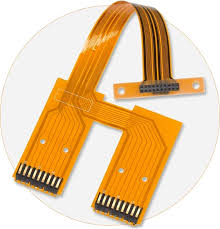
Can flex circuits support multiple circuits?
Due to their streamlined designs, flex circuits can improve airflow, which can lower operating temperatures and extend the lifecycle of your device. Additionally, the copper traces and ultra-thin electrical dielectrics can disperse heat much more effectively than their rigid counterparts. Most failures in a circuit occur at the points of connection. Multilayer flex circuits have fewer interconnections than their traditional wire and cable counterparts, which can significantly enhance a product’s reliability.
Although it is possible to build a single-sided flex circuit with plated through holes, the design would need to be carefully planned in order to ensure proper performance. The stresses that are placed on the copper and film substrate when a flex circuit is bent can cause work-hardening and fatigue fractures in these materials. To prevent these problems, it is recommended that the conductors traversing a bend area be staggered to minimize contact areas and thereby avoid high levels of compression or stress at these points. In addition, it is also recommended that the bend radii be kept as large as possible to minimize strain.
The simplest solution to this problem is to use a double access flex circuit. With this type of circuit, the conductor pattern can be accessed from either side, eliminating the need to provide anchoring stubs or reduced coverlay openings for the pads. However, this does limit the amount of through-hole pads that can be mounted on the flex circuit, especially for surface mount components.
One of the essential considerations in adhesive selection for flex circuits is thermal management. In many electronic applications, heat is a significant factor due to the operation of components or environmental conditions. The adhesive must have high thermal resistance to avoid degradation or failure, which could lead to delamination or loss of electrical connectivity.
Another option is to use a hot bar solder connection between the rigid board and a flex circuit. This eliminates the need for a connector between the two and offers a more secure and reliable connection. It is important to note, however, that a hot bar solder connection will not be as durable as a solder ball or epoxy bond between a rigid board and a flex circuit.