primary applications of microwave circuit board
Microwave circuit boards are indispensable for enabling precise signal transmission at higher frequencies. They facilitate critical functions in a diverse array of industries including telecommunications infrastructure upgrades, aerospace advancements, and medical device innovations. These specialized circuit boards enable the transmission of data at microwave frequencies, which require specific impedance control, signal routing techniques, and grounding strategies to mitigate signal loss, minimize electromagnetic interference, and enhance the reliability of high-frequency electronic systems.
The specialized requirements of high-frequency microwave circuit board necessitate a comprehensive understanding of the underlying principles of PCB design and manufacturing processes. Consequently, ensuring the precision and reliability of microwave PCBs demands the use of specialized fabrication techniques that prioritize adherence to stringent design guidelines. Advanced simulation tools and modeling techniques also facilitate iterative optimizations of high-frequency circuit designs before physical realization. This allows engineers to refine their designs and push the limits of high-frequency performance.
To maximize the performance of high-frequency circuits, it is essential to choose a PCB laminate with low dissipation and a stable dielectric constant. While FR4 and other traditional PCB laminates are adequate for most applications, they can experience significant insertion losses at higher signal frequencies. As a result, incorporating a high-performance FR4 or other high-frequency laminate into the design of a microwave PCB is essential for optimizing performance.
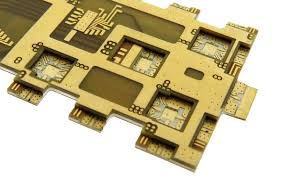
What are the primary applications of microwave circuit board?
Other important aspects of designing a microwave PCB include minimizing crosstalk and preventing unwanted interference. To achieve this, the PCB must be constructed with thick copper layers, which reduce conductor loss and ensure proper thermal management. Additionally, the circuit should be configured using either a parallel double or microstrip line structure. Parallel double lines are ideal for transmitting signals at lower frequencies, while microstrip lines are more suitable for higher-frequency signal transmission.
The final step in ensuring the performance of a microwave circuit board is rigorous testing and quality assurance procedures. These protocols involve thorough inspection of the dimensional accuracy, integrity, and consistency of substrate materials to guarantee that they adhere to design specifications. In addition, accelerated life tests and environmental stress screening help evaluate long-term durability and reliability under challenging operating conditions.
The demand for microwave PCBs is on the rise, fueled by industry trends and innovation drivers. In particular, the need to incorporate sophisticated functionalities into compact form factors drives the requirement for high-frequency circuitry that can deliver heightened performance in space-constrained environments.
As a result, the market projections for microwave circuit boards exhibit robust growth opportunities as manufacturers continue to invest in innovative technologies that address advancing industry needs while pushing the limits of performance. This trend will further be accelerated by the ongoing proliferation of 5G networks and IoT devices. As such, it is essential for manufacturers to leverage advanced manufacturing technologies to meet the growing demand for high-frequency circuits while enhancing efficiency and productivity.